
Disclosure: This site contains affiliate links for products and services we recommend. Read our Terms & Conditions for more information. If you make a purchase through these links, at no extra cost to you, we will earn a small commission (for which we are eternally grateful).
I LOVE survival books. It’s kind of a side obsession of mine. So, naturally, I went on a post-apocalyptic books binge as my weirdo way of coping with the whole global health crisis. But after reading Moon of the Crusted Snow, I fell in love. And I realised that despite always trying to read diversely, it’s embarrassing how few books by Indigenous authors I’ve actually read. So I decided to redouble my efforts to finally find and read as many books by Indigenous authors as I could!
And I am so glad that I did, because a good chunk of my favourite books I read in 2020 are by Indigenous authors.
While I read across a range of genres, having read this article as a follow up to Moon of the Crusted Snow… which lead to reading this article about Indigenous sci-fi writing, and being in the headspace I was, I knew that I definitely wanted to focus my efforts on specifically reading post-apocalyptic books by Indigenous authors.

So I read everything I could find, including genres I don’t normally read, like YA apocalypse books and zombie apocalypse books! From graphic novels to general Indigenous sci-fi with some post-apocalyptic vibes thrown in, if you love post-apocalyptic books as much as I do, these are some of the best out there. Full stop.
I absolutely loved so many of these post-apocalyptic novels. I loved the stories and the rep in many of them. But ultimately I am not an Indigenous person. Follow more Indigenous book bloggers and influencers and booktubers if you want to know about Indigenous rep and cultural critiques of these books and others (that second playlist is from Native Lady Book Warrior). Although Indigenous people might relate more to stories by other Indigenous writers, regardless of tribe, they are not a monolith, and where possible seek out the voices of the group being written about.
And please watch this video about racism towards Indigenous writers – and reviewers – in the book community, so that the next time you pick up a book by someone from any culture different to yours (cause it applies across the board), you reflect on whether your reasons for not liking a book have more to do with your understanding – or lack thereof – of the subject matter than the book and the writing itself.
If you are in the US or Canada, please consider purchasing these books from Indigenous owned bookstores.
Interested in going paperless? Here are a few book services we recommend:
➤ With Kindle Unlimited you can get these books and more. KU gives you unlimited Access to over 1 million eBooks and magazines every month. Try it free for 30 days
➤ On an Audible subscription you get a free audiobook every month, and discounts on thousands more. Amazon Prime members get TWO free audiobooks their first month. Try it free for 30 days
➤ Don’t yet have Amazon Prime? In addition to your additional audiobook, Prime members get early access to upcoming hot new releases via Amazon First Reads, and can borrow up to 10 books from Prime Reading. Start your free 30 day trial
Now, without further ado, my favourite post-apocalyptic books by Indigenous authors:

Moon of the Crusted Snow by Waubgeshig Rice (2018)
One day the satellite doesn’t work, next the cellular phone service. But the residents of this small northern Anishinaabe reservation aren’t too worried, even after the power goes out completely and the landlines. After all, it’s only been a few years since the rez even had some of these amenities and it’s not uncommon for them to stop working for a few days.
Except, they never all stop working at the same time…
Once it passes the one week mark, people begin to worry. There’s been no contact with the outside world and all the food at the local store gets bought up in a few hours. Evan, our main protagonist, and a few friends are doing their best along with the reservation leaders to keep everyone calm and safe.
Soon outsiders find their way to the reservation, and although Evan questions their intentions, he puts them to work hunting. Tensions continue to run high as the residents struggle through the harsh northern Canadian winter on limited resources.
Moon of the Crusted Snow is an eerily atmospheric post-apocalyptic novel that will have you rushing to find out what happens. This is the book that set me on this Indigenous books binge, and it’s easily one of my favourite reads of 2020.
Waubgeshig Rice is an Anishinaabe writer and journalist from the Wasauksing First Nation in Canada.
RELATED: World-Ending Post Apocalyptic TV Series
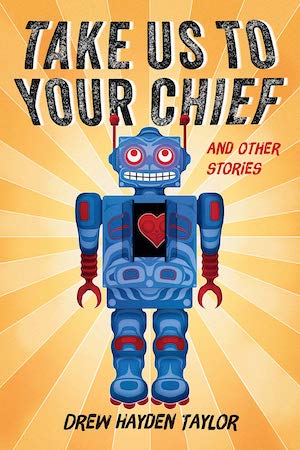
Take Us to Your Chief, And Other Stories by Drew Hayden Taylor (2016)
If I’m being honest, only one of these stories counts as post-apocalyptic (the first one), although there are certainly a few dystopian and PRE-apocalyptic tales in here, as well. But I loved this collection so damn much that I just had to add it, anyway.
The stories in Take Us to Your Chief are so original, funny and heartbreaking, that I now want to read everything else I can find by Drew Hayden Taylor. All of these stories approach sci-fi and fantasy through a lens we rarely get to look through, and it is done masterfully. Some of the stories, such as I Am… Am I rehash old tropes with a fresh take, while others are stories we’ve never seen before, such as Mr. Gizmo (at least I haven’t…).
While not all of the stories centre Indigenous identities, most do, and they all feature Native cultures in some way. And as Taylor himself is part Ojibwe and part Caucasian, he understands perfectly how to straddle this divide.
This year I wanted to read more Indigenous books and more short story collections, and I’m so glad I did or I might not have discovered this book. Add Take Us to Your Chief to your list of must read post-apocalyptic books, you won’t be sorry!
FYI: Another one of these stories features in our post on best time travel books!
Drew Hayden Taylor is a Canadian playwright, author and journalist and is half Ojibwe and half Caucasian.
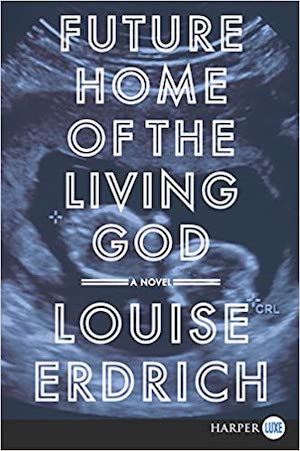
Future Home of the Living God by Louise Erdrich (2017)
The world is ending. Every living being is somehow deteriorating and reversing itself, and in the panic, people have turned on each other. Women’s bodies are now commodities, their wombs don’t belong to them as scientists and the government become desperate to find a cure.
On the cusp of social collapse, Catholic convert Cedar Hawk Songmaker, the adopted daughter of Glen and Sera, two liberal Minneapolites, has just found out she’s pregnant. Before she tells Glen and Sera, she first wants to find her birth mother, an Ojibwe named Mary Potts, to see if there are any medical ailments her baby might inherit. Future Home of the Living God is told through Cedar’s diary entries as she meets her family, alludes capture and tries to keep her baby safe.
So I love post-apocalyptic novels, but I have mixed feelings about Future Home of the Living God and I’m going to be really upfront about the fact that it was not for me. Not because I’m not Ojibwe – I actually would have loved if there was more emphasis on the Ojibwe culture, and I liked all the discussions around racism and tokenism – but because I have less than zero interest in three of the main themes of this book: motherhood, birth and Christianity.
So that’s on me, cause I really should have known that going in. However, I did appreciate the intersectionality of this book as it examined racism in ways many feminist post-apocalyptic novels about body autonomy have not done in the past.
I also thought the second 2/3 of the first part (there are three parts) could have just been removed from the book as it got totally bogged down by Christian . I almost gave up at this point and only persevered because I was assured it got better after that, which it did and I’m ultimately glad I did finish it!, But yeah, so not the book for me. However, if these topics interest you, it’s definitely worth giving this post-apocalyptic book a go!
Louise Erdrich is an Anishinaabe author, and enrolled member of the Turtle Mountain Band of Chippewa Indians in the USA.
Buy Future Home of the Living God
Note: I’ve seen A LOT of reviews complain that Erdrich’s post-apocalyptic novel was unoriginal and just a rehashing of The Handmaid’s Tale… It’s not, and saying it is is racism, misogyny, ignorance or all three. Stories and concepts are recycled all the time, Erdrich’s take on female agency and womb autonomy in a dystopian world might sound similar to some other books, but it is unique and harrowing in its own way. And it does not centre whiteness the way that The Handmaid’s Tale does. It’s fine if you don’t like Future Home of the Living God, but we wouldn’t even be having this conversation if it was old white dudes.
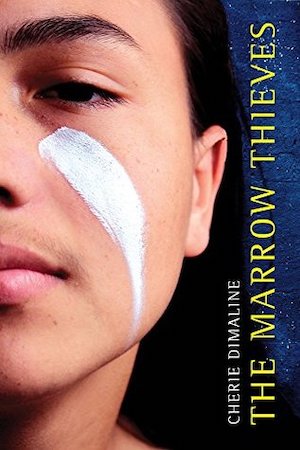
The Marrow Thieves by Cherie Dimaline (2017)
In Cherie Dimaline’s post-apocalyptic book, The Marrow Thieves, everyone has lost the ability to dream. Everyone that is, but the Indigenous tribes, who are being kidnapped and farmed to allow those who can pay for the sweet release of dreams.
The book opens with French and his brother on the run from the Recruiters, agents who hunt down Indigenous people for the government. When his brother is captured, French is left to end for himself, but luckily soon comes across another group on the run, headed North. As French’s story unravels, we also get to know his new family, and how they came to be together.
Throughout The Marrow Thieves we are also treated to snapshots of Indigenous culture as the younger members of the group learn from the elders about their own history and traditions, something that they long for. The book also draws many parallels – both spoken and implied – between what is happening now, and what happened to Native people in Canada (where it takes place) and the US after colonisation. And if you are totally unfamiliar with this history, you might do well to brush up on it before reading The Marrow Thieves since it is not written for people unaware of the schools and Native genocides.
I flew through this book, and was sad when it ended because I wanted to spend more time with the characters. Dimaline’s writing is captivating, many of her descriptions even have a sort of a dream like quality that made the book somehow feel more real, as well as atmospheric. The book was marketed as YA, and while it certainly has YA vibes, I think it’s the kind of book that even people who tend not to enjoy YA apocalypse books (like myself) can happily sink their teeth into.
Cherie Dimaline is a writer and activist from the Métis Nation in Canada.
RELATED: Books About Racism from Around the World
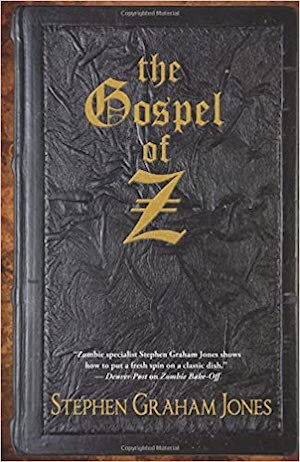
The Gospel of Z by Stephen Graham Jones (2014)
The zombie apocalypse setting gets a twist with this 2014 dystopian novel from Blackfleet Native American author Stephen Graham Jones. As books by Indigenous authors go, this one doesn’t focus on the Native American culture to which Jones belongs, instead leaning more towards a military-vs-religion-fought-by-a-believer-in-neither standpoint.
We follow protagonist Jory Gray – a former teacher turned scientist working for the military 10 years after the world’s population was almost destroyed by the undead. After an accident in his lab gets him signed up to an almost suicidal duty mopping up stray zombies outside the protection of the military compound, he plans to try and rescue his former lover from the clutches of the church she suddenly surrendered herself to one night. Can he manage to survive long enough to even attempt it? And just what is the Gospel of Z?
I’m not really a fan of zombies in general (they’ve been in EVERYTHING), and less so of military fiction, but Jory is a relatable character, and his cynicism and world-weariness leads to some good dialogue. Although zombie apocalypse books are not my forte, I think this is a fairly original take on the zombie genre. The world Jones has made really does feel like a grounded possibility of what humans would end up doing if there was an actual zombie apocalypse. There are some genuinely creepy moments as well, which is always a plus.
While I might not love zombies, Jones is one of my favourite horror authors, and is responsible for some of my top horror novellas.
Stephen Graham Jones is a Blackfeet Native American author.
RELATED: Sci-Fi Detective TV Series
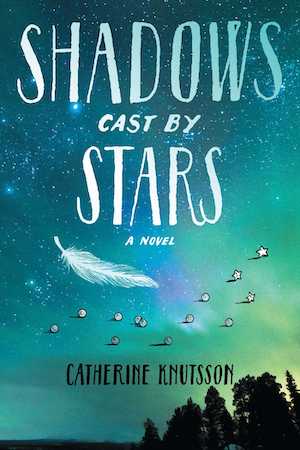
Shadows Cast by Stars by Catherine Knutsson (2012)
Two hundred years from now, Cassandra (Cass) Mercredi is forced to flee her home with her father and twin brother and sail to the Island – a refuge for people of the Indigenous Métis nation (of which Knutsson is a member) from a government who would harvest their blood to cure a plague that is ravaging non-Indigenous people, but to which the Métis are immune.
Once in her new environment, Cass must learn to adapt to the rules of her new society, though her instincts tell her that all is not well here. Something is wrong with the spiritual balance of the Island, and those who appear friendly may have motives of their own.
I thoroughly enjoyed this YA post apocalyptic book, and was enthusiastically rooting for Cass as she worked to settle herself and her family, dodging potential manipulation in her new community and working to gain more control over the spiritual forces she and her brother are attuned to. There are strong supernatural elements to this story; each character has a spirit animal visible to Cass, which gives her an added insight into their motivations.
As the natural and supernatural worlds begin to merge, Knutsson does a good job of creating scenes of unnerving tension, whether it be from the spirit world or the human one, and there are many likeable characters to get behind.
Catherine Knutsson is an enrolled member of the Métis Nation in Canada.

Prism Stalker by Sloane Leong (2019)
At the heart of this Indigenous Futurist graphic novel is Vep, a refugee raised by the Sverans as an indentured. Vep hasn’t been on her home world since she was a small child, she can no longer speak her Indigenous language, and remembers very little, mostly just snippets from her memory and from the stories told by her family.
One day, a visiting foreign power takes her to train as an elite military member under The Chorus. The Chorus’ aim is to break people down to be perfect fighting machines. But can Vep allow parts of herself to be unlocked in order to do what she must and protect her family?
If you prefer your post apocalyptic books in picture form, Prism Stalker is the book for you. This is a gorgeous, visceral feast of a graphic novel full of incredibly unique aliens, worlds and magics.
Currently there is only one volume available, but I hope to see more of this post apocalyptic series in the future.
Sloane Leong is an artist and writer with Native American, Hawaiian, Mexican, Chinese, Italian, and European heritage.
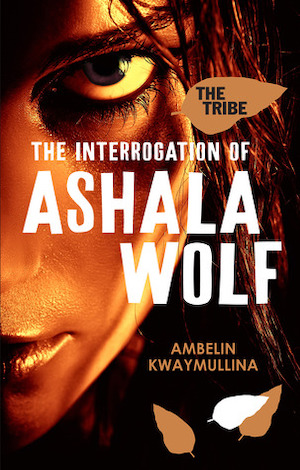
The Interrogation of Ashala Wolf by Ambelin Kwaymullina (2012)
“You can’t transform a society for the better with violence, Ashala. Only with ideas.”
Ashala Wolf is an Illegal, a person born with a special ability, who is unregistered with the government. She lives in the Firstwood, a magical forest full of flesh-eating lizard creatures called Saurs.
But now Ashala has been captured by the government and put in a detention centre where she will be questioned about the Tribe, a group of young Illegals who have run away from home and now live in Firstwood. Will she survive her interrogation, and can she escape before it’s too late?
Set hundreds of years in the future after the Reckoning, an apocalyptic event where climate change nearly destroyed the world, The Interrogation of Ashala Wolf is a beautiful mindfuck. The book has X-Men mutant vibes, to be sure, but has more than enough of it’s own personality and plot that it never feels like it’s rehashing familiar plots.
I was not at all expecting to enjoy the first in this post apocalyptic book series as much as I did. As I’ve said, I don’t tend to like YA fiction, and I especially don’t tend to like YA dystopia or apocalypse books (of which this is both) because I find they sort of all meld into one after awhile. But I genuinely loved The Interrogation of Ashala Wolf. I couldn’t put it down and wound up reading late into the night/early the next morning in order to finish it.
Ambelin Kwaymullina is a Palyku novelist, illustrator, and assistant professor of law.
Buy The Interrogation of Ashala Wolf

Walking the Clouds: An Anthology of Indigenous Science Fiction edited by Grace L. Dillon (2012)
This collection, first published in 2012, is the first-ever anthology book of science fiction written by Indigenous authors. There are works here by people from many different cultures and backgrounds, including New Zealand Maori, Caribbean, First Nations, and Aboriginal Australian writers. The reader has an equally expansive selection of sci-fi staple subjects on to enjoy, including works covering alternative histories, alternate realities, contact with extraterrestrial life and good old time travel.
Although not all of the stories in Walking the Clouds post apocalyptic or dystopian, but it’s still a great place to start to discover more Indigenous authors!
As the editor of the book, Dillon’s commentary is insightful, and her introduction gives context to the collection of works as a whole, and her commentary makes this selection of Indigenous fiction beneficial not only to lovers of great fiction but also to students of both Indigenous literature and science fiction in general.
Walking the Clouds works as a great introduction to Indigenous sci-fi, and while the anthology is primarily novel excerpts rather than stand-alone short stories, it will have you adding plenty of books by Indigenous authors to your to-read list.
Grace L. Dillon is an American academic and author with Anishinaabe and European heritage. She also coined the term ‘Indigenous Futurism’ which can be applied to most of these post apocalyptic books by Indigenous authors.